betPawa Ghana: Licence, Withdrawals and Verification
A hypothetical withdrawal file: what would be checked first
Imagine a Ghanaian player has a withdrawal marked as pending. The player has used the exact betPawa Ghana host, deposited from an account in their own name, completed the requested identity checks and saved the transaction reference. This is a hypothetical file, not a reported betPawa outcome. The sensible first step would be to preserve the account ID, deposit and withdrawal timestamps, payment references, screenshots of the status, and every support reply. The second step would be to compare the host and operator details with the evidence in this dossier. The third would be to ask support for a clear reason, the missing document if verification is incomplete, and the relevant terms clause. A pending status alone does not establish misconduct, and the supplied packet contains no verified withdrawal test or complaint outcome.
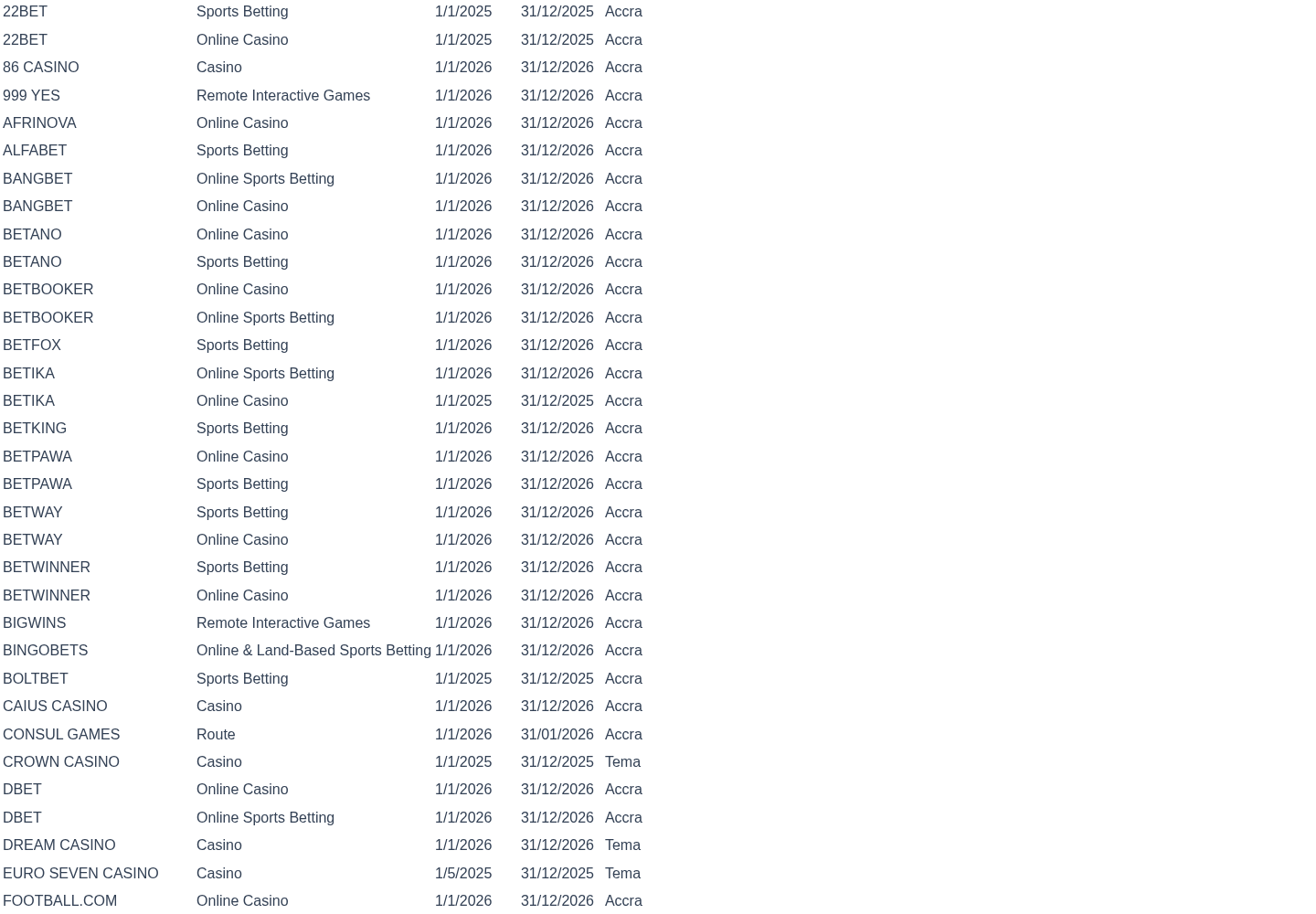
betPawa is assessed here as an open-evidence case. The Ghana Gaming Commission operator-table evidence lists Choplife Gaming Limited for Sports Betting and Online Casino, with a licence period stated as 01/01/2026–31/12/2026. That record supports a current licence indication for the named operator and activity, but the packet does not supply a precise domain entry that can be matched to an exact host. The result is therefore amber rather than green. It is not a finding that betPawa is illegal, fraudulent or unsafe; it is a reason to complete the host, entity and transaction checks before depositing.
Evidence checklist for betPawa Ghana
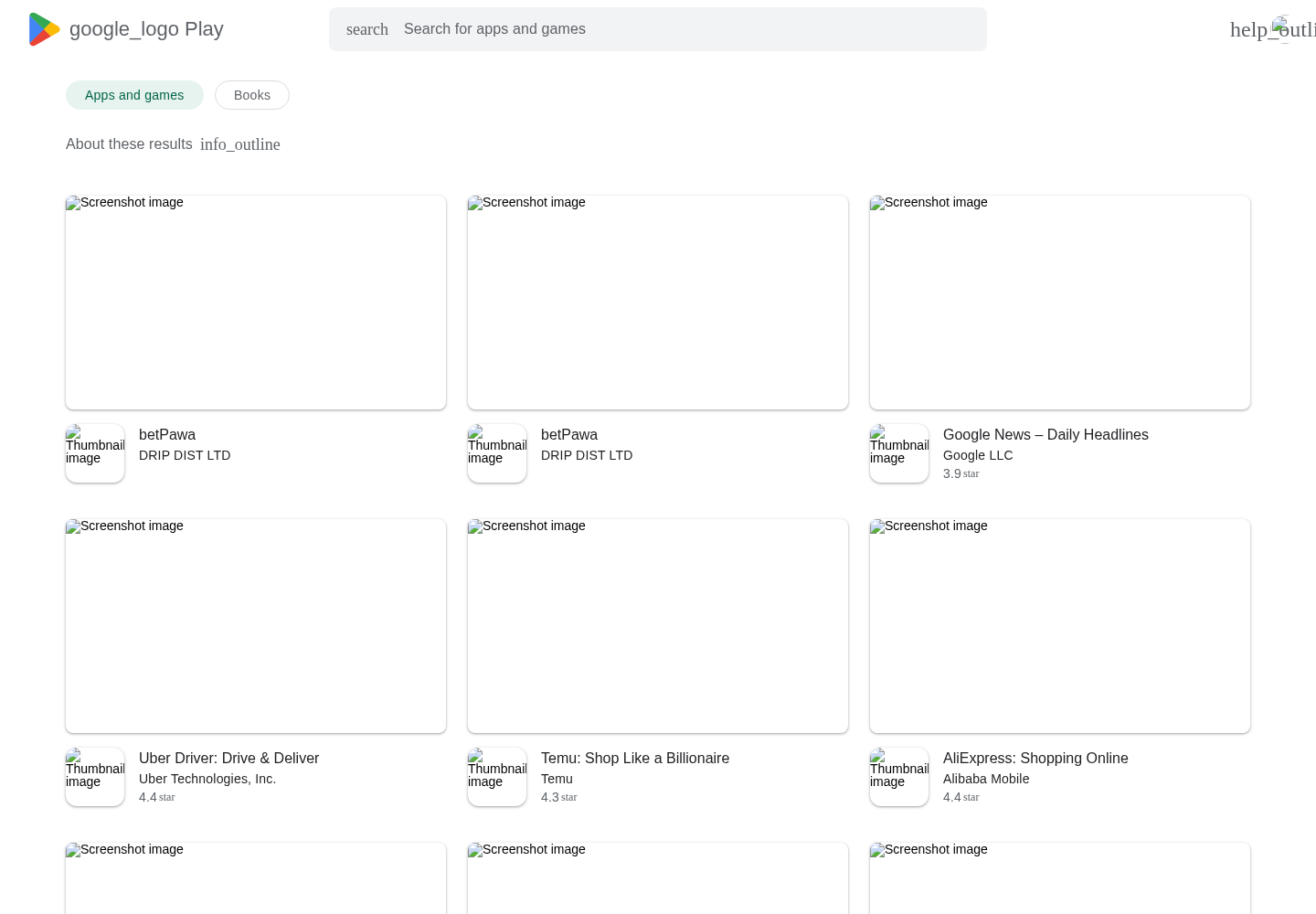
The strongest evidence supplied is the Ghana Gaming Commission operator-table record. A 13 May 2026 capture is supplied as an image, while the current operator-table source was checked on 20 August 2026. The legal framework summary supplied from the Business Regulatory Reform portal states the licensing requirement under Act 721. The betPawa terms page supplies operator wording, but wording on an operator-controlled page is not regulator proof. The Google Play search result supplies identity context only; ratings and reviews are not a licensing record and do not prove that a particular payment was completed.
| Check | Supplied evidence | What it establishes | What remains open |
|---|---|---|---|
| Ghana licensing record | Ghana Gaming Commission operator table | A listed operator, operation type and licence dates | A precise host-to-entity match is not supplied |
| Operator identity | Choplife Gaming Limited in the supplied licence claim; operator terms wording | The name to compare against the regulator record | Whether every relevant betPawa host is operated by that entity |
| Legal framework | Act 721 summary and licensing requirement | The regulatory context for licensed gaming | It does not by itself confirm a particular account or transaction |
| App or brand context | Google Play search result for the operator Ghana | Search and identity context | It does not prove licensing, ownership or withdrawal performance |
Visit a checked casino option · 18+
The evidence chronology matters. The supplied registry capture is dated 13 May 2026. The source ledger records the operator-table and other sources as checked on 20 August 2026. The licence period in the packet runs from 1 January 2026 to 31 December 2026. Those dates should not be silently converted into a promise that the licence will continue after expiry, nor into proof that an account opened on any other host belongs to the listed operator.

Licence, operator and host match
The supplied licence description is specific in two ways: it names Choplife Gaming Limited and describes Sports Betting and Online Casino. It also supplies the 2026 start and end dates. That is useful for a Ghanaian reader asking whether a company with this name appears in the regulator’s table. It is not enough to treat every page, mirror, advertisement or mobile application using the the brand name as automatically covered.
The unresolved point is the exact host. The packet gives an empty exact_domain field. The operator evidence refers to the the service terms page, while the primary evidence concerns the regulator’s table. Those are different roles and should not be merged. Before using an account, compare the address bar, spelling, secure connection, footer operator wording and payment instructions. A matching logo is weak evidence because it can be copied. A matching operator name is stronger only when it appears on the exact host and aligns with the regulator record.
| Identity element | Supplied position | Practical interpretation |
|---|---|---|
| Brand | the operator | Useful starting label, not a complete host identity |
| Named operator | Choplife Gaming Limited | Compare against the Ghana Gaming Commission record |
| Activity | Sports Betting and Online Casino | The supplied licence description covers both stated operation types |
| Licence dates | 01/01/2026–31/12/2026 | Check the date against the time of use; no post-period conclusion is supplied |
| Exact domain | Not supplied | Do not assume a host match that the packet does not document |
The answer to “is the brand legal in Ghana?” must therefore be precise. The supplied primary record supports that Choplife Gaming Limited is listed for Sports Betting and Online Casino for the stated 2026 period. The packet does not establish that every the service-branded host is the licensed host. The answer to “is the operator a scam?” is also not proven either way by this packet. The amber signal reflects an open host-to-entity question, not an adverse official finding.
Payments: identify the transaction before judging it
No specific payment method, processing time, fee, minimum, maximum or successful deposit is supplied. Those details must not be filled in from general market expectations or from another operator. A payment check should begin with the exact account and the exact channel shown inside that account, not with an advert, forwarded message or a number sent by an unknown contact.
For a deposit, record the date, amount, payment rail, sender name, recipient or merchant label, reference number and account balance before and after the transaction. Check whether the payment account is in the player’s name and whether the platform displays a matching transaction record. If money is requested through a personal wallet, a different brand, an unofficial agent or a link that changes the host, pause rather than treating the request as normal.
| Payment question | What this dossier can say | What the player should retain |
|---|---|---|
| Which methods are accepted? | Not supplied | The method shown in the account and its transaction receipt |
| What are the fees or limits? | Not supplied | The displayed fee, limit and time of the transaction |
| Was a deposit credited? | No verified transaction is supplied | Payment reference and before-and-after balance |
| Is a payment contact genuine? | Cannot be confirmed from branding alone | Official account location, host spelling and support correspondence |
The operator terms source can be consulted as operator-controlled wording, but it should not be presented as independent confirmation. The supplied primary regulatory sources do not provide a payment test. Readers looking for a separate payment-risk process can use payment checks, while this dossier keeps the the brand evidence boundary intact.
Withdrawals and the evidence gap
The editorial angle is a withdrawal casebook, but the packet contains no verified withdrawal test. There is no dated record showing a successful or failed cash-out, no supplied processing-time observation, no payment receipt and no regulator decision about a the service withdrawal. Accordingly, no conclusion should be drawn from the absence of a test. “Withdrawals work” and “withdrawals do not work” would both exceed the evidence.
A player with a pending withdrawal should create a chronological file. Start with the request time and amount. Add the displayed status, any stated processing window, KYC messages, support ticket numbers and payment references. Keep the account balance and transaction history visible in screenshots, but redact passwords, one-time codes, full payment credentials and identity numbers before sharing them. If the amount or status changes, record the change rather than replacing the original file.
A useful escalation question is: “What exact verification item or account condition is preventing release of withdrawal reference [reference], and which terms clause or process step applies?” The request should ask whether the account is restricted, whether a document is unreadable or expired, whether the payment destination differs from the verified account holder, and whether any additional action is required. Do not send documents to a contact whose host or identity has not been confirmed.
The absence of a supplied withdrawal test is a material limitation. It means the dossier cannot rate speed, reliability, fees, reversal handling or dispute outcomes. A user report can describe an experience, but the supplied app-search record is contextual only and does not verify any individual withdrawal. Readers should separate a screenshot of an in-app balance from proof that funds were actually received.
KYC and account ownership checks
The packet does not specify the documents the operator requests, the verification stages, review times or restrictions applied during KYC. Do not infer a Ghana Card requirement, proof-of-address requirement, selfie check or source-of-funds review from common practice. The correct evidence-led position is that KYC details remain open unless the exact host presents them and the player can preserve the relevant wording.
Before submitting anything, check that the account name, payment account and identity information are consistent. Use only the verification route shown within the confirmed host or a support channel independently confirmed through that host. Never disclose a password, one-time passcode, card security code or wallet PIN. Keep a record of what was submitted, when it was submitted, the file name or reference, and the response received. If a document is rejected, ask for the precise defect rather than repeatedly uploading unclear copies.
KYC can be a legitimate account-control process, but a request is not automatically genuine because it uses the the brand logo. A clone may copy a sign-in screen or ask for an urgent “verification fee”. The supplied packet contains no evidence of such a request from the service; this is a risk-control example, not an allegation. A request to pay a separate person to unlock a withdrawal should be treated as a warning until verified through the exact host’s support route.
Clone checks and scam-or-legit signals
A clone check compares several independent details rather than relying on appearance. Type or use the known address carefully, inspect spelling and the top-level domain, and avoid links supplied in unsolicited messages. Confirm that the operator wording is consistent with the named entity. Compare payment instructions with the account interface. Treat a new phone number, a changed host, pressure to act immediately, guaranteed returns, a request for a password or a request for an unlock payment as risk signals.
| Signal | Why it matters | Safe response |
|---|---|---|
| Host spelling differs by a character | A copied brand can imitate the genuine name | Stop and verify the address independently |
| Payment recipient changes unexpectedly | Funds may be diverted outside the expected account process | Do not pay until support confirms the change |
| Urgent request for password or one-time code | Credentials can take over the account | Refuse and use the confirmed support route |
| Operator name does not align with the licence record | Entity identity is unresolved | Save the details and seek clarification |
| Attractive logo or app listing alone | Visual identity is easy to copy and app search is contextual | Treat it as a starting clue, not proof |
The supplied independent capture is a Google Play search-result context image. It does not establish that an app is licensed, that its publisher is the named operator, or that a withdrawal has been paid. The supplied registry capture is stronger for the regulatory listing, but it still does not fill the missing exact-domain field. These roles explain the amber signal.
Complaints, limits and correction path
The evidence packet supplies no complaint, complaint decision, response-time test or regulator correspondence about the operator. A player should first preserve the transaction file and raise a focused case through the confirmed operator support route. Include the account identifier in a suitably redacted form, transaction reference, dates, amount, exact error or status, KYC state and previous ticket numbers. Avoid sending unnecessary identity documents through public posts.
If the operator does not resolve the issue, the next route depends on the matter and the competent Ghanaian process. The supplied legal source explains the licensing context but does not supply a the brand-specific complaint outcome. Use the site’s complaints guide for the evidence needed for escalation and the licence checks guide for comparing the named operator with the regulatory record. Those internal guides do not turn an unresolved allegation into a proven violation.
The correction path is important if the host, operator, licence status or transaction record changes. Send a dated correction request identifying the precise sentence, the supporting record and the requested amendment. A correction should distinguish a changed primary record from a new user report. A report of a resolved withdrawal should not be rewritten as proof that all withdrawals succeed, and an allegation should not be described as an established fact without a dated competent-source record.
For safer account boundaries, review responsible gambling and urgent help. No supplied record supports a particular deposit limit, loss limit, self-exclusion process or intervention outcome for the service, so those features remain unverified here.
What is known, unknown and how the signal was set
The known core is narrow but useful: the Ghana Gaming Commission operator-table evidence is primary; it lists the named operator and the supplied sports-betting and online-casino activity for the 2026 period; Act 721 licensing context is supplied from a primary government source; operator terms are operator evidence; and the app-search result is user-context evidence. The unknowns are equally important: the exact domain, a verified host-to-entity match, payment methods, fees, limits, KYC documents and timing, withdrawal performance, complaint handling and any adverse or resolved case outcome.
The signal is amber with an open-evidence basis. Green would require current primary evidence supporting the precise domain and entity. Red would require an official adverse record or corroborated documented adverse evidence. Neither threshold is met by the packet. The operator listing is not ignored, but it is not stretched beyond what it records. The result should change only when a dated, relevant record closes or materially changes the open questions.
| Evidence tier | Record in this dossier | Weight and limit |
|---|---|---|
| Primary | Ghana Gaming Commission operator table; Act 721 government summary | Best support for regulatory listing and legal framework, not a transaction test |
| Operator | the operator terms wording | Describes operator claims or terms; not independent regulator proof |
| User context | Google Play search-result identity context | May help identify a brand or app; does not prove licensing or payment outcome |
The method is deliberately conservative: identify the claim, assign the source role, preserve the date, compare the named entity and activity, and state the missing link instead of filling it with assumption. That method is also why a complaint would remain an allegation unless a dated competent-source record established more. For a fuller explanation of source handling, see the methodology guide.
Practical decision checklist before using the host
A reader considering the brand Ghana should first confirm the precise host and avoid assuming that the brand name alone proves identity. Then compare the displayed operator details with Choplife Gaming Limited and the supplied Ghana Gaming Commission listing. Confirm the licence date is relevant to the intended use. Review the exact payment and KYC wording presented by the confirmed host, recording the date because terms can change.
Before depositing, decide what evidence would be needed if a withdrawal became delayed: payment reference, account history, withdrawal request, support ticket and correspondence. Keep personal security credentials private. If a message directs payment to an unexpected recipient or asks for an unlock fee, stop and verify. If a dispute arises, preserve the chronology and use the complaint route rather than making a public accusation unsupported by records.
There is one commercial route provided for readers who have completed their own checks: View checked options. This link is not evidence of licensing, payment performance, approval or a guaranteed result. Readers who are not satisfied that the host and operator match should not treat the CTA as a substitute for verification.
web.archive.org · gamingcommission.gov.gh · brr.gov.gh
FAQ
Is betPawa licensed in Ghana?
The supplied Ghana Gaming Commission evidence lists Choplife Gaming Limited for Sports Betting and Online Casino for 01/01/2026–31/12/2026. The exact betPawa host is not supplied, so the packet supports a licence indication for the named operator but not a complete host-to-entity match.
Is betPawa legal or a scam?
The packet does not establish that betPawa is illegal or a scam. It supplies a primary operator-table record for Choplife Gaming Limited, while leaving the exact host match open. The resulting signal is amber, not a finding of fraud or an official adverse decision.
Can you confirm that betPawa withdrawals work?
No. The supplied packet contains no verified withdrawal test, receipt, processing-time observation or complaint outcome. A pending or successful user report would need to be assessed separately and should not be presented as a universal result.
What should I check before making a betPawa deposit?
Check the exact host spelling, operator wording, licence-period relevance and payment recipient. Preserve the transaction reference and avoid unsolicited links, unexpected payment changes, password requests, one-time-code requests and separate unlock fees.
What KYC documents does betPawa require?
The supplied evidence does not specify betPawa’s KYC documents, review times or account restrictions. Use only the verification instructions on the confirmed host, keep a submission record and ask support to identify the precise missing or rejected item.
How should I complain about a delayed betPawa withdrawal?
Preserve the withdrawal reference, amount, dates, status, payment record, KYC messages and support replies. Raise a focused case through the confirmed operator route, then follow the evidence and escalation steps in the complaints guide. The packet contains no betPawa-specific complaint decision.
Why is the betPawa signal amber?
The supplied primary record supports a named operator and activity for the stated 2026 licence period, but the exact domain is missing and there is no verified withdrawal test. Amber reflects open evidence; green and red require the stronger thresholds described above.