KeedBet Ghana: licence, operator and payment checks
KeedBet Ghana starts with an identity mismatch to check
KeedBet presents a Ghana-facing identity, but the evidence packet does not provide a confirmed exact domain. That matters because a local-facing name is not, by itself, proof that the website you reach is the same service shown in a regulator’s records. The available operator wording identifies Games Tech in a KGL support record, while the Ghana Gaming Commission table records a sports-betting licence entry for the relevant trade name. Those two pieces are useful, but they do not close every identity gap.
The practical question is therefore narrower than “does KeedBet exist?” It is: can the specific host, operator and licence be matched before money or identity documents are submitted? On the supplied evidence, the answer remains open rather than conclusively positive or negative. The overall signal is amber. That is not a finding of illegality, fraud or non-payment. It means the current primary evidence supports a Ghana licensing entry, while the precise host and cross-border identity still require careful confirmation.
The most important first step is to compare the address in your browser with the address displayed in KeedBet’s own account, payment and legal information. Do not treat a search result, an app listing, a familiar logo or a copied welcome page as proof of the authorised host. A clone can reuse all four.

What the Ghana licence evidence actually shows
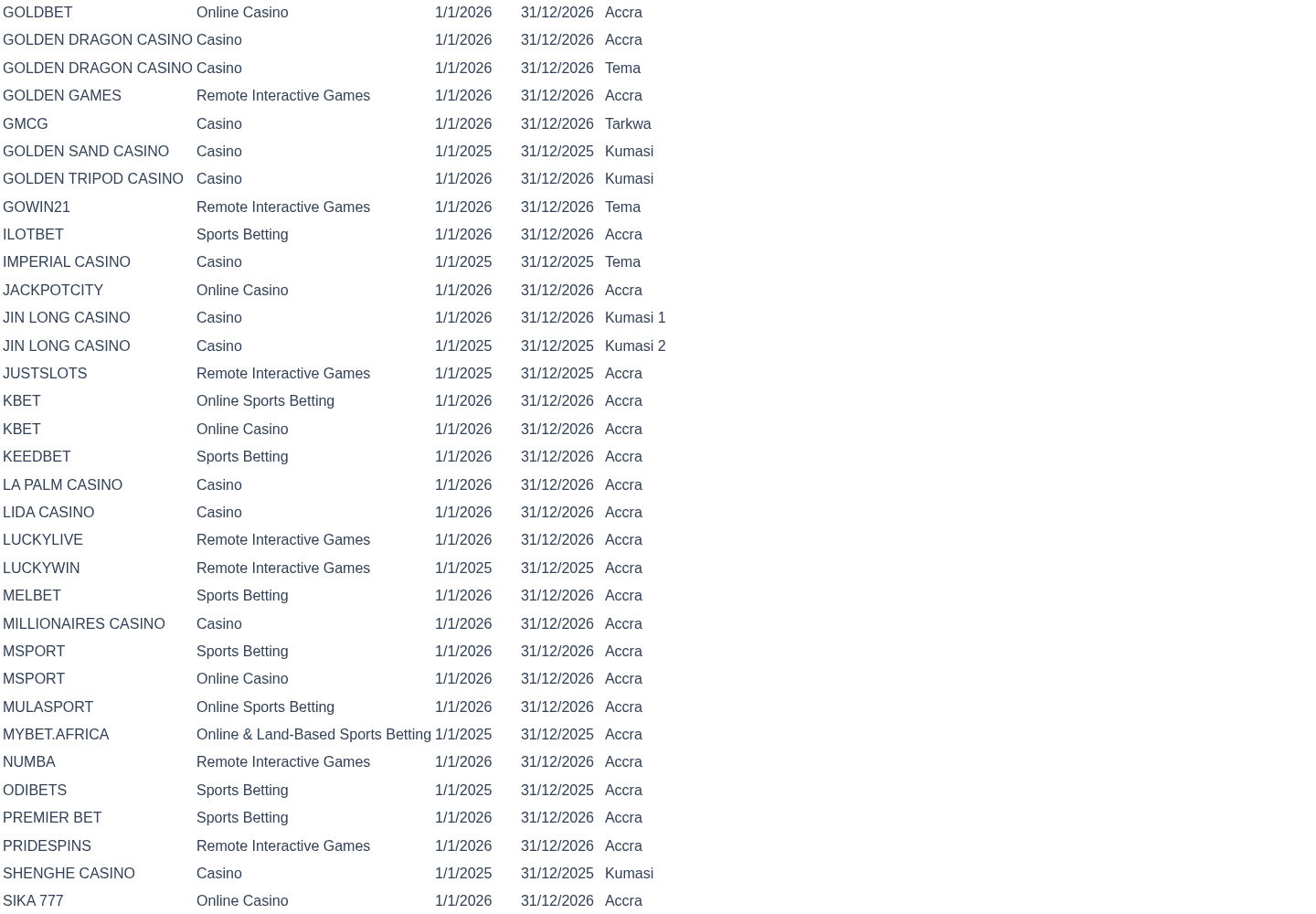
The supplied primary records identify a Ghana Gaming Commission table containing a KeedBet-related trade-name entry for Sports Betting, with the stated period 01/01/2026–31/12/2026. The packet does not provide a licence number, a licence-holder legal name, a separate casino authorisation, or a confirmed exact domain. Those omissions should remain visible when assessing the result.
A licence table is stronger than an operator’s self-description because it is a regulator record. It can support the existence of an entry at the time checked, but it does not automatically prove that every website using the same brand is authorised. Nor does a sports-betting category establish that casino products, games, payment services or a particular mobile application are covered by the same entry.
The dated capture used for the evidence image was checked on 20 August 2026 and depicts a 13 May 2026 capture of the Commission’s operator table. The separate current-table source was also checked on 20 August 2026. This chronology is relevant: a record can change, expire or be amended, so the date and scope of the entry matter more than a badge displayed on a marketing page.
| Licence question | Supplied evidence | What it establishes | What it does not establish |
|---|---|---|---|
| Regulator | Ghana Gaming Commission operator table | A primary table entry is available for the relevant trade name | It does not identify every mirror, clone or app package |
| Activity | Sports Betting | The listed operation type is sports betting | It does not prove a separate casino authorisation |
| Period | 01/01/2026–31/12/2026 | The stated licence period in the packet | It does not prove validity outside that period |
| Licence holder | Not supplied in the packet | No definitive legal-holder match can be stated | Games Tech cannot be treated as regulator-confirmed solely from support wording |
| Exact host | Not supplied | No domain-level match can be confirmed | A Ghana-facing address is not enough |
Visit a checked casino option · 18+
For the legal framework, the supplied summary of Act 721 states that licensing is required. The summary is useful context, but it does not fill the missing domain, holder or product details. Read the licensing requirement summary alongside the Commission record rather than treating either source as proof of a particular website’s identity.
Is KeedBet legal or a scam?
The evidence does not support a simple “legal” or “scam” label. The primary record supports an entry in Ghana’s licensed-operator table for sports betting during the stated 2026 period. That is a meaningful positive data point. At the same time, the exact host is blank in the packet, the legal holder is not supplied, and the operator wording comes from a support record rather than from the regulator’s table. Those limits prevent a stronger conclusion about a particular destination.
“Legal” should mean more than a brand appears in a list. Before registration, a user should establish three links: the address they are visiting, the legal entity or operator named in the terms and account communications, and the regulator entry covering the relevant activity. If any link is missing, the correct status is unresolved.
“Scam” is also a serious conclusion and cannot be inferred from an incomplete identity match. No official adverse record, corroborated documented non-payment finding, or verified complaint outcome is supplied here. The amber signal therefore reflects open evidence, not an adverse verdict. Users should still treat an unresolved match as a practical risk, especially before depositing or uploading identity documents.
A safer interpretation is: KeedBet has a supplied primary licensing signal for Ghana sports betting, but the packet does not establish that every KeedBet-branded host is the licensed service or that casino activity falls within the listed scope.
Exact host, operator and licence matching
The packet names Games Tech as the operator in KGL support wording. That source is classified as operator evidence, so it records what the support material says; it is not independent confirmation of the legal licence holder. The packet does not provide the exact domain. Consequently, this dossier cannot name a definitive authorised URL, legal company registration, registered address, licence number or expiry beyond the stated licence period.
Use the following matching sequence. First, copy the complete address from the browser, including the spelling, country-code ending and any unusual hyphens. Second, inspect the footer, terms, privacy notice and payment instructions for the operator name. Third, compare that name and the business activity with the Commission table. Fourth, ask support to confirm the exact host and the licence scope in writing, keeping the response with the date and account reference removed or protected.
| Item to compare | Match needed | Result from supplied packet | User action if absent |
|---|---|---|---|
| Browser host | Exact address of the service being used | Not supplied | Do not assume the brand name identifies it |
| Trade name | KeedBet or the precise name shown in the record | Licensing evidence is described as a Commission table entry | Compare spelling and activity |
| Operator wording | Games Tech in KGL support wording | Operator-sourced, not regulator confirmation | Check terms and account notices |
| Legal holder | Named entity in primary licensing material | Not supplied | Request the legal name before depositing |
| Licence scope | Sports Betting entry, 2026 period | Supplied | Do not extend it automatically to casino products |
The current licensed-operator table is the appropriate primary location for a fresh comparison. The archived capture is separately useful as dated evidence of what was visible on 13 May 2026; it should not be mistaken for a live status check.
Clone and impersonation checks for KeedBet
A the operator clone may copy the brand, colour palette, logo, registration wording and even a screenshot of a licence list. The supplied logo is an editorial identifier only; it does not authenticate a host. The same caution applies to the independent app-search capture: it provides identity context, while ratings and reviews are contextual and not regulator proof.
Check the address character by character. Watch for extra words, substituted letters, unusual top-level domains, shortened links, pop-up redirects and pages that ask for a deposit before showing terms. A legitimate-looking HTTPS connection only encrypts the connection; it does not prove that the business is licensed. Do not rely on a link received through an unsolicited message, an advert with a compressed address or an APK supplied outside a recognised app channel.
The payment recipient is another useful check. Before sending funds, confirm whether the recipient name and payment instructions are consistent with the operator information shown in the service’s terms. A personal mobile-money number, a changing recipient, or a request to pay through an unrelated intermediary does not prove fraud, but it is a reason to pause and obtain clarification.
Save the address, terms, deposit instructions and relevant messages before proceeding. Never send an identity document to “verify” a replacement address merely because the original page stopped working. If the host, operator and licence cannot be joined into one coherent record, use the unresolved status and avoid escalating exposure.
KYC and account eligibility
No user eligibility rule, age threshold, accepted identity document, verification turnaround, source-of-funds procedure or account restriction policy is supplied in the packet. Those details must not be invented. the operator users should therefore read the service’s current terms and KYC notice directly before registration, while recognising that an operator statement remains different from an independent regulatory record.
KYC commonly affects deposits, withdrawals, account recovery and responsible-gambling controls, but the packet does not establish which documents the brand accepts or when it may request them. Do not assume that a Ghanaian phone number, mobile-money account or local-facing brand removes verification requirements. Do not create duplicate accounts to bypass a review, and do not submit altered documents.
Before uploading anything, check that the host is the one you intended to use, that the privacy information identifies the responsible operator, and that the upload page is reached through the verified account flow rather than a message link. Redact information that is not requested where permitted, keep a record of what was submitted, and avoid sending identity documents through informal support channels.
| KYC point | What is known | What remains unknown | Sensible verification step |
|---|---|---|---|
| Identity provider | No independent provider is supplied | Who reviews documents and where | Read the current KYC and privacy terms |
| Documents | No accepted-document list is supplied | Whether national ID, passport or another document is accepted | Obtain the list from the verified host |
| Timing | No review period is supplied | When withdrawals may be held | Ask before depositing significant funds |
| Data handling | No packet fact confirms storage or retention terms | Where data is processed and for how long | Review the privacy notice and retain a copy |
| Eligibility | No age or account rule is supplied | Which Ghana users may register | Confirm the current terms before registration |
Deposits and payment path
The evidence packet does not verify a the service payment method, deposit limit, fee, processing time, mobile-money network, card route, bank route or payment-service provider. No payment method should be presented as available merely because it is common in Ghana or appears in an unrelated search result. The absence of a verified payment record is an evidence limit, not proof that payments do or do not work.
For a deposit, record the currency, minimum and maximum amount, displayed fee, recipient name, transaction reference and account balance after the transaction. Confirm that the payment instruction is inside the verified account and that the recipient is consistent with the service’s stated arrangements. Do not pay a “release”, “tax”, “activation” or “verification” charge to an individual outside the normal account process without independent confirmation.
A successful deposit is not evidence of a successful withdrawal. Payment availability can vary by account, network, compliance review and date. The supplied records include no controlled payment test, so no conclusion can be made about speed, reliability or reversals.
| Payment question | Evidence status | Why it matters |
|---|---|---|
| Available methods | Not verified | The visible method may change by user or location |
| Fees | Not supplied | A displayed amount may not equal the received amount |
| Processing time | Not supplied | Deposit speed says nothing about withdrawal speed |
| Recipient | Not supplied | An unexpected recipient creates an identity question |
| Failed transaction handling | Not supplied | Keep references and request a trace through the verified account |
For broader checks on payment evidence, use the internal payment checks guide. It can help structure a record without turning an unverified method into a claim about the operator.
Withdrawals: what cannot be claimed
There is no supplied withdrawal test, successful cash-out record, failed withdrawal record, payout time, fee schedule, limit, reversal example or independent outcome. It would therefore be inaccurate to say that the brand pays quickly, delays withdrawals, rejects winners or provides a particular cash-out channel. Those are precisely the claims that require dated, reproducible evidence.
Before betting, read the withdrawal terms and note whether the account must be fully verified, whether a withdrawal must return through the original payment route, and whether limits or fees apply. These are verification questions, not established the service facts in this dossier. Take a screenshot or secure copy of the terms only for your own records, and protect account numbers and identity information.
If a withdrawal is pending, keep the request time, amount, method, transaction reference, support ticket and every response. Do not repeatedly cancel and recreate a request merely to make it appear active. Do not pay an unofficial intermediary to unlock funds. If support changes the explanation, preserve the sequence so a complaint body can distinguish a missing document request from a payment dispute.
A withdrawal problem alone does not prove criminal conduct. It may involve KYC, payment-network reconciliation, a limit or a terms dispute. Conversely, repeated unexplained demands for extra money are a risk signal that warrants stopping further payments and preserving evidence.
Complaints and escalation route
The packet does not supply a confirmed the operator complaint email, telephone number, response deadline or completed complaint outcome. Start with the service’s verified support channel, not a contact copied from an unverified clone. State the account identifier without sending a password, provide the transaction reference, describe one issue at a time, and ask for a written explanation and the precise term relied upon.
Give support a reasonable opportunity to respond under the terms you accepted, but do not allow repeated informal promises to erase the timeline. Keep dates, amounts, payment references, screenshots, host address and every response. Remove full identity numbers before sharing material more widely.
If the matter concerns licensing, an unauthorised host or a serious compliance concern, the Ghana Gaming Commission is the relevant primary regulatory context in the supplied packet. The Commission record should not be treated as proof that it will decide a private payment dispute or guarantee recovery. A complaint should distinguish what you personally observed from what you suspect.
| Complaint stage | Record to keep | Avoid |
|---|---|---|
| Internal support | Ticket, date, host, transaction reference | Sending passwords or complete identity numbers |
| Follow-up | Exact unanswered question and deadline stated in terms | Repeated deposits to obtain a response |
| Regulatory concern | Brand, exact host, operator wording and licence comparison | Calling an allegation a proven offence |
| Evidence package | Chronological messages, amounts and requested remedy | Editing screenshots so dates or addresses disappear |
The internal complaints guide explains how to organise an escalation. It does not replace a regulator’s decision and does not establish an outcome for the brand.
Evidence chronology and source roles
The primary capture is dated 13 May 2026 and was checked for this dossier on 20 August 2026. It is paired with a current licensed-operator source checked on the same date. A legal-framework summary concerning Act 721 was also checked on 20 August 2026. The KGL support record supplies operator wording about Games Tech and the service terms; it is not a regulator record. The Google Play search result supplies app and brand identity context; ratings and reviews are not treated as proof of licensing, payment performance or a complaint outcome.
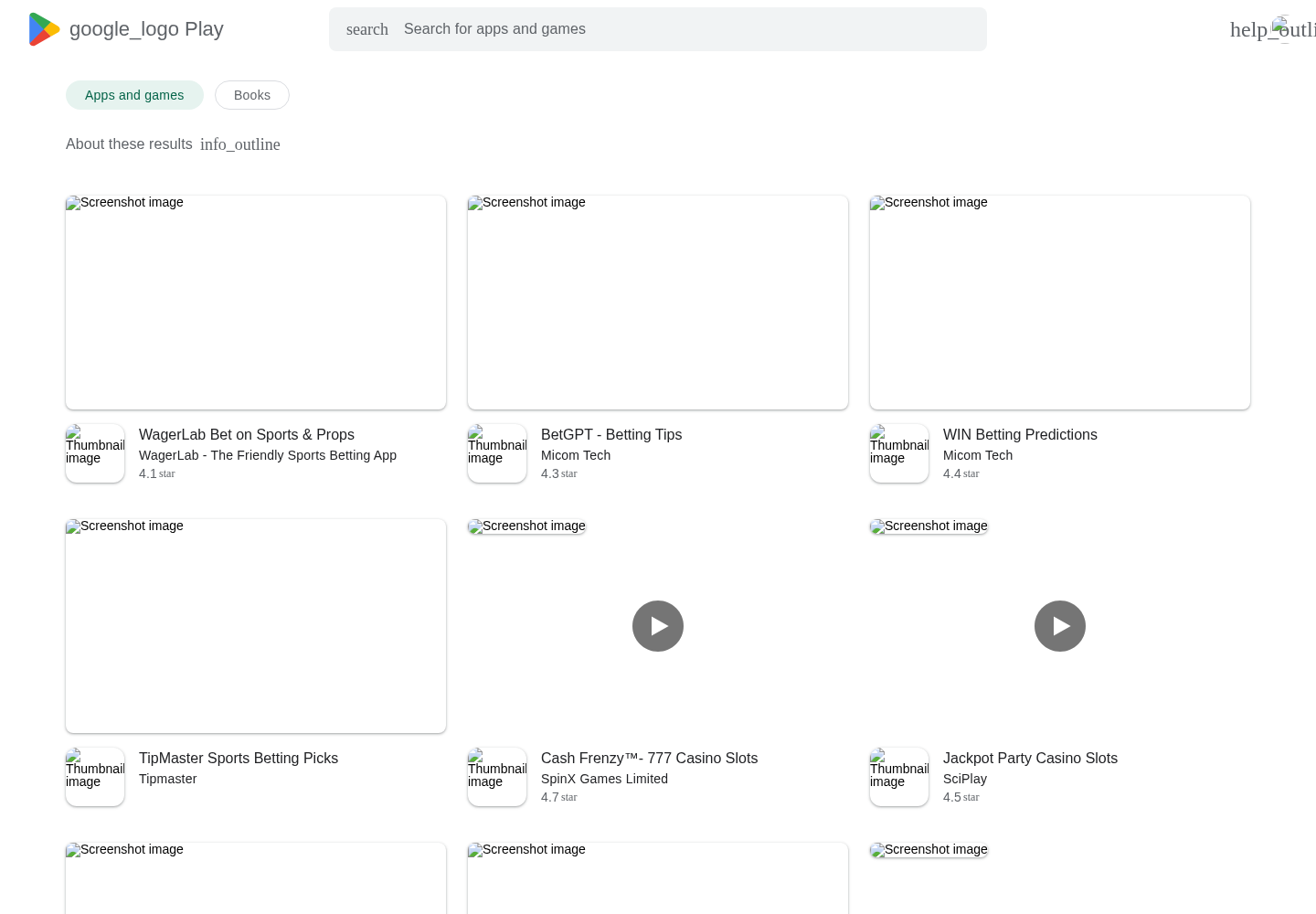
This separation matters because different sources answer different questions. A regulator table can support a licensing-entry claim. Operator support can show what the operator says. User-context material can show that a brand appears in a search environment. None of those, alone, proves that a particular host is genuine, that a withdrawal succeeded, or that a complaint was resolved.
The archived licensing capture is linked once as the dated evidence context for the image above. It is not presented as a live page. The current Commission link is used separately for present-tense checking, while the Act 721 summary provides legal context.
How this dossier reaches the amber signal
The methodology is deliberately conservative. A green signal would require current primary evidence matching the precise domain and entity to the relevant licence. A red signal would require an official adverse record or corroborated documented adverse evidence. The packet supplies neither condition. It does supply a primary licensing entry described as sports betting for 2026, but it leaves the exact host and definitive legal-holder match open.
That combination produces amber: there is a useful primary record, yet the cross-border identity chain is incomplete. The signal should not be read as a probability of winning, a safety guarantee or an accusation. It is a prompt to verify the destination and scope before exposure.
The conclusion should change if a current primary record clearly connects the exact host and legal entity to the licence, or if an official adverse record changes the position. It should also remain cautious if a brand page merely repeats the licensing claim without adding an independent match.
Risks, unknowns and correction path
The central risks are identity confusion, cloned hosts, scope confusion between sports betting and casino products, unknown KYC requirements, unknown payment routes and the absence of a withdrawal test. There is also no supplied licence number, legal company name, confirmed domain, expiry field beyond the stated 2026 period, complaint outcome or verified performance history.
If the operator or a reader can supply a dated primary record that identifies the exact host, licence holder and relevant activity, the assessment can be corrected. Send a correction request through the site’s contact route with the source date, record location, precise claim and the part of this assessment it supports. Do not send passwords, full identity documents or payment credentials. A correction should preserve the distinction between a regulator record, an operator statement and a user report.
For practical preparation, keep the address bar visible in saved evidence, record the date in local time, preserve original transaction references, and do not crop away the operator name or licence scope. If the evidence conflicts, the conflict should remain stated until a competent primary record resolves it. The amber signal is preferable to filling that gap with assumptions.
the brand verification checklist
Before registering, confirm the exact host and read its legal and privacy information. Before depositing, compare the operator wording, licence activity and payment recipient. Before submitting KYC documents, confirm that the account is on the intended host and understand the stated data process. Before requesting a withdrawal, note the applicable terms and retain the request reference. If a complaint arises, use the verified support route first and keep a chronological record.
Users who decide that the identity evidence is sufficient can review the available route to View checked options for the next step; the link is provided as a commercial route, not as a guarantee of legality, availability, approval, payment or winnings.
FAQ
What should I check before uploading KYC documents?
Confirm the exact host, inspect the operator and privacy information, and read the current KYC requirements before submitting anything. The packet does not state which documents are accepted, how long review takes or where data is stored. Do not send documents through an informal or replacement address.
Is KeedBet licensed in Ghana?
The supplied primary evidence describes a Ghana Gaming Commission table entry for Sports Betting covering 01/01/2026–31/12/2026. The packet does not provide the exact domain, licence number or definitive legal-holder match, so the entry should not be extended automatically to every KeedBet-branded host or to casino products.
Who operates KeedBet?
Games Tech is named in KGL support wording as the operator. That is operator evidence, not independent regulator confirmation of the legal licence holder. The supplied packet does not provide a confirmed legal entity name or registered address.
Are KeedBet deposits and withdrawals verified?
No payment method, fee, processing time, withdrawal test, successful payout or failed payout is supplied. Do not assume that a deposit method or withdrawal route is available; check the verified host’s current terms and keep transaction references.
How can I complain about a KeedBet problem?
Use the verified service support route first, provide the transaction reference and request a written explanation. Keep the host address, dates, amounts, messages and requested remedy. For a licensing or unauthorised-host concern, organise the evidence for the relevant Ghana regulatory channel without describing an allegation as a proven offence.
Can this KeedBet assessment change?
Yes. A dated primary record matching the exact host, legal entity and relevant licence scope could resolve the open identity issue. An official adverse record could also change the signal. Operator statements, app-search context and unverified screenshots alone would not be enough.